Vitamin E suppositories may ease vaginal dryness, but the proof is thin. A 2022 systematic review found only four small randomized trials, all from Iran and lasting 8 to 12 weeks, and the authors called vaginal vitamin E a possible short-term option that still needs better studies [1]. ACOG lists vitamin E and D vaginal suppositories among nonhormonal options for breast cancer survivors, while noting that no single nonhormonal approach has been shown to be better than the others [5].
Below, we walk through each study honestly, explain how vitamin E was used in the research, and show how it compares with other options for vaginal dryness.
The short version
- What it is: vitamin E (an antioxidant oil) placed inside the vagina as a suppository or soft capsule.
- Evidence: four small trials in postmenopausal women and one trial in women taking tamoxifen. All showed improvement, but all were short and small [1][4].
- Head to head: vitamin E did about as well as estrogen cream by 12 weeks in two trials that may share the same patients, but worked more slowly [1][2]. Hyaluronic acid beat a low dose of vitamin E in one trial [1].
- Main cautions: oil can damage latex condoms, products aren’t standardized, and side effects like burning were reported [2][9].
- Bottom line: a reasonable thing to ask your clinician about, especially if you can’t use estrogen, but not a proven first choice.
What are vitamin E suppositories for vaginal dryness?
They are small doses of vitamin E oil placed inside the vagina, usually at bedtime. In research, they came as ready-made vaginal suppositories; some cancer-care resources also describe using the oil from a vitamin E capsule on the vulva and vagina [2][10].
Vitamin E is a fat-soluble antioxidant. A 2025 clinical review in breast cancer survivors describes it as having anti-inflammatory and antioxidant effects that may support healing of tissue [8]. Memorial Sloan Kettering lists vitamin E alongside coconut oil as examples of natural oils that can be used inside or outside the vagina as soothing moisturizers [9].
People usually try vitamin E for dryness caused by genitourinary syndrome of menopause (GSM), the drop in estrogen that thins and dries vaginal tissue. According to The Menopause Society (formerly NAMS), GSM symptoms affect about 27% to 84% of postmenopausal women [6].
What does the research actually show?
In short: a handful of small, short trials found improvement, and none was large or long enough to settle the question. Here is each study in plain terms.
The 2022 systematic review (Porterfield et al.)
Researchers searched for randomized trials of vaginal vitamin E and found 31 candidate studies, but only four met their standards [1]. All four were done in Iran between 2010 and 2014, and they used three different symptom scales, so the results couldn’t be pooled into one analysis [1]. The review found no trials comparing vitamin E with vitamin D [1].
- Vitamin E vs. placebo (42 women, 8 weeks, 1 mg vitamin E): vitamin E reduced symptoms more than placebo [1].
- Vitamin E vs. hyaluronic acid (40 women, 8 weeks): 5 mg hyaluronic acid worked better than 1 mg vitamin E [1].
- Vitamin E vs. estrogen cream (two trials, 52 women each, 12 weeks, 100 IU vitamin E): no significant difference in sexual function or quality of life [1].
The authors flagged real problems. The two estrogen-comparison trials had the same group sizes, similar recruitment dates and similar baseline traits, which raises the possibility that they drew on the same women [1]. Patients weren’t blinded in those trials, outcomes were self-reported, and long-term safety is unknown [1]. The review also notes that The Menopause Society and EMAS do not currently recommend vaginal vitamin E for GSM [1].
Vitamin E vs. estrogen cream: tissue changes (2016)
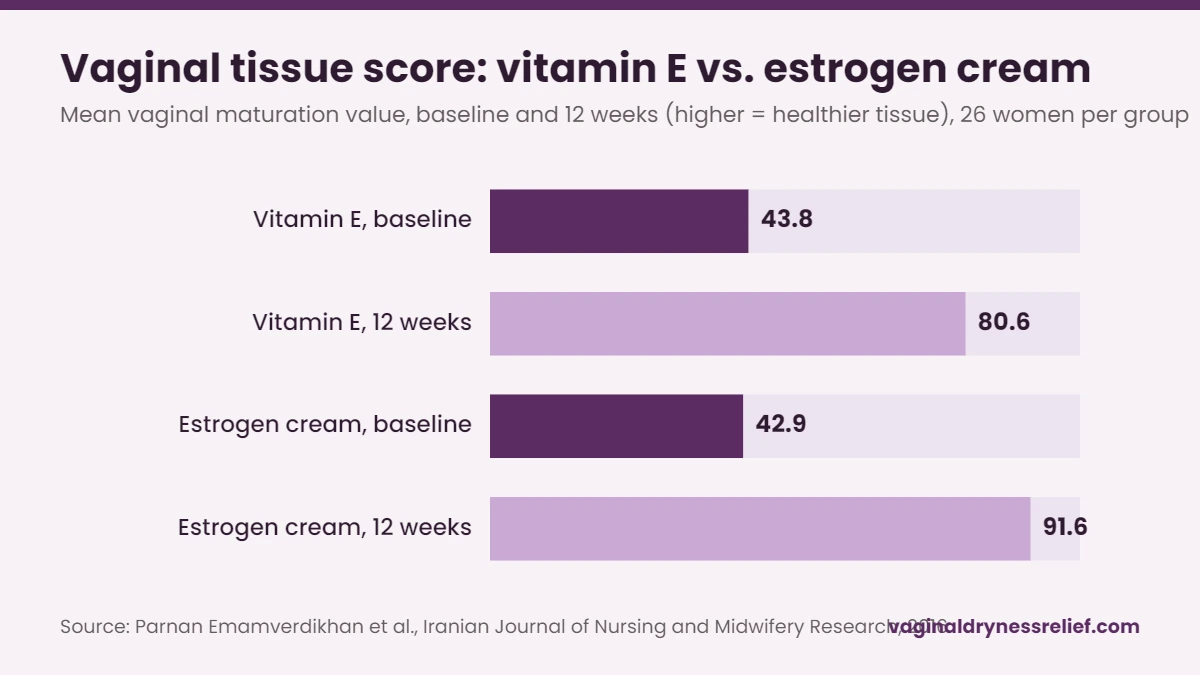
This trial from Mashhad, Iran, randomized postmenopausal women aged 40 to 65 to a 100 IU vitamin E vaginal suppository or conjugated estrogen vaginal cream; 26 women per group were analyzed [2]. It measured the vaginal maturation value, a lab score from a Pap smear that rises as tissue becomes healthier [2].
| Group | Value |
|---|---|
| Vitamin E, baseline | 43.8 |
| Vitamin E, 12 weeks | 80.6 |
| Estrogen cream, baseline | 42.9 |
| Estrogen cream, 12 weeks | 91.6 |
Both groups improved significantly [2]. Estrogen worked faster: at 4 weeks, 100% of the estrogen group met the study’s definition of success versus 76.9% of the vitamin E group, a significant difference [2]. By 8 and 12 weeks the gap was no longer significant, with 92.3% success for vitamin E and 96.2% for estrogen at 12 weeks [2].
Vitamin E vs. estrogen cream: sexual function (2019)
A 52-woman trial in the International Urogynecology Journal compared the same two treatments over 12 weeks and measured sexual function with a questionnaire [3]. Scores rose significantly in both groups, with no significant difference between them [3]. The authors suggested vitamin E may be an alternative for women who can’t use hormone therapy [3]. As noted above, the review authors suspect this trial and the 2016 one may share participants [1].
Women with breast cancer taking tamoxifen (2019)
One triple-blind trial randomized 96 women with breast cancer on tamoxifen to nightly vaginal vitamin E, vitamin D or placebo suppositories for 8 weeks [4]. Compared with placebo, both vitamin groups had better maturation scores, lower vaginal pH and fewer self-reported symptoms [4]. The abstract gives P-values only, not the size of the effect [4]. If you’re a survivor, see our guide to vaginal dryness after breast cancer.
What do medical organizations say?
Guidance is cautious: vitamin E is named as an option for some women, but it isn’t a standard recommendation.
- ACOG (Clinical Consensus No. 2, 2021): lists vitamin E and D vaginal suppositories, along with lubricants, hyaluronic acid and polyacrylic acid, as nonhormonal options for people with a history of estrogen-dependent breast cancer. It says there are insufficient data to show one approach is superior and that trying several may be needed [5].
- The Menopause Society (2020 GSM position statement): recommends lubricants and regular long-acting vaginal moisturizers as first-line therapy. The statement doesn’t discuss vitamin E, and it notes that oil-based lubricants can erode condoms [6].
- NAMS/ISSWSH (2018, breast cancer): calls nonhormonal treatments first line for women with or at high risk of breast cancer, with moisturizers the mainstay. It doesn’t mention vitamin E [7].
How was vitamin E used in the studies?
Trials used a nightly loading phase, then fewer doses. Don’t start any routine without checking with your clinician, especially after cancer.
| Study group | Dose | Schedule | Length |
|---|---|---|---|
| Postmenopausal women (vs. placebo or HA) | 1 mg vaginal vitamin E | Daily for 2 weeks, then every other day | 8 weeks [1] |
| Postmenopausal women (vs. estrogen) | 100 IU vaginal suppository | Nightly for 2 weeks, then twice a week | 12 weeks [1][2] |
| Breast cancer, on tamoxifen | Not stated in abstract | Nightly at bedtime | 8 weeks [4] |
A 2025 review for breast cancer survivors lists vitamin E at 30 to 200 IU nightly [8]. Alberta Health Services’ cancer-care page describes breaking open a vitamin E capsule and applying the oil to the vulva and vagina daily, and suggests ready-made vaginal moisturizers may work better if you’re prone to yeast infections [10].
One point of confusion: some resources mention taking vitamin E by mouth [10]. The trials above tested vitamin E placed in the vagina, so their results don’t tell us whether swallowing capsules helps dryness.
What are the side effects and limits?
Reported side effects were mild, but the trials were too small and short to judge long-term safety [1].
- Burning and discharge: in the 2016 trial, three women in the vitamin E group withdrew because of vaginal burning and one because of increased discharge [2].
- Condoms: oils can break down latex condoms and sex toys. With latex, use a water- or silicone-based lubricant instead [6][9][10].
- Yeast: The Menopause Society notes oil use has been linked to more Candida colonization [6].
- Radiation: Alberta Health Services advises waiting until pelvic radiation is finished before using vitamin E [10].
- Product quality: vitamin E is sold as a dietary supplement. The FDA does not approve supplements for safety and effectiveness before they’re sold [11], and capsules made to be swallowed weren’t designed or tested for vaginal use.
- Thin evidence: small samples, all-Iranian trials, possible overlapping participants and outcomes that were mostly self-reported [1].
How does vitamin E compare with other options?
Vitamin E has the least evidence of the four common choices below. For a wider look, see our treatments guide and vaginal estrogen vs. hormone-free options.
| Option | Hormone-free? | Evidence | Condom-safe? | Notes |
|---|---|---|---|---|
| Vaginal vitamin E | Yes | 4 small RCTs in postmenopausal women + 1 in tamoxifen users [1][4] | Oil can damage latex [6] | Not recommended by The Menopause Society or EMAS for GSM [1] |
| Vaginal moisturizer | Yes | First-line (Level A) per The Menopause Society [6] | Check the label | Used about 2–3 times a week [6] |
| Hyaluronic acid | Yes | Small RCTs; beat low-dose vitamin E in one trial [1][6] | Check the label | No proof it beats other moisturizers [6] |
| Low-dose vaginal estrogen | No (prescription) | Strongest evidence for GSM [6] | Ask your clinician | Faster than vitamin E in one trial [2] |
If you’re comparing hormone-free products, our guides to hyaluronic acid and moisturizer vs. lubricant can help.
Looking for hormone-free everyday comfort?
If you want a hormone-free addition to your comfort routine, AIRS Advanced Intimate Renewal Serum is a cosmetic serum with hyaluronic acid in single-use applicators that helps moisturize and soothe delicate intimate skin. It is not a substitute for a prescribed medicine, so talk with your clinician about combining it with any treatment. Choose 1 box (20% off through December 31), subscribe & save 10%, or the 90-Day Regimen (3 boxes, $138/box through December 31, free shipping).
When should you see a doctor?
See a clinician if home care isn’t helping or if you notice anything new or unusual. Our guide to talking with your doctor can help you prepare.
- Any vaginal bleeding after menopause
- Burning, itching or discharge that starts or worsens after using vitamin E
- Pain during sex that doesn’t improve with a lubricant
- Dryness that doesn’t get better after a few weeks of consistent care
- You’ve had breast cancer or are on tamoxifen or an aromatase inhibitor and want to try any vaginal product
- You’re having pelvic radiation [10]
Frequently asked questions
Do vitamin E suppositories work for vaginal dryness?
Small trials suggest they may help in the short term, but the evidence comes from four small studies, all from Iran, lasting 8 to 12 weeks [1]. Larger, better-designed trials are still needed.
Is vitamin E as good as vaginal estrogen?
Two small trials found no significant difference by 12 weeks, but estrogen worked faster at 4 weeks [2][3]. The two trials may have shared participants, so this finding is uncertain [1].
Can I use vitamin E suppositories after breast cancer?
ACOG lists vitamin E and D vaginal suppositories as nonhormonal options for people with a history of estrogen-dependent breast cancer [5]. One trial in women on tamoxifen found benefits over placebo [4]. Talk with your oncology team first.
Can I use vitamin E with condoms?
Oils can damage latex condoms [9]. If you use latex condoms, choose a water- or silicone-based lubricant [9].
How long does vitamin E take to work?
In the 2016 trial, 76.9% of women using vitamin E met the success target by 4 weeks and 92.3% by 12 weeks [2].
Should I swallow vitamin E capsules for dryness?
The trials tested vitamin E placed inside the vagina, not swallowed [1]. Ask your clinician before taking supplements by mouth.
Related reading
- Vaginal Estrogen Alternatives
- Vaginal Dryness Treatments
- Natural Remedies for Vaginal Dryness
- Coconut Oil for Vaginal Dryness
- Hyaluronic Acid for Vaginal Dryness
- Vaginal Dryness After Breast Cancer
- Menopause & GSM
- Vaginal Moisturizer vs. Lubricant
Sources
- Porterfield L, Wur N, Santiago Delgado Z, Syed F, Song A, Weller SC. Vaginal Vitamin E for Treatment of Genitourinary Syndrome of Menopause: A Systematic Review of Randomized Controlled Trials. J Menopausal Med. 2022;28(1):9–16. PMID: 35534426. DOI: 10.6118/jmm.21028. Link
- Parnan Emamverdikhan A, Golmakani N, Tabassi SAS, Hassanzadeh M, Sharifi N, Shakeri MT. A survey of the therapeutic effects of Vitamin E suppositories on vaginal atrophy in postmenopausal women. Iran J Nurs Midwifery Res. 2016;21(5):475–481. PMID: 27904630. DOI: 10.4103/1735-9066.193393. Link
- Golmakani N, et al. Vitamin E as alternative local treatment in genitourinary syndrome of menopause: a randomized controlled trial. Int Urogynecol J. 2019;30(5):831–837. PMID: 29971469. DOI: 10.1007/s00192-018-3698-z. Link
- Keshavarzi Z, Janghorban R, Alipour S, Tahmasebi S, Jokar A. The effect of vitamin D and E vaginal suppositories on tamoxifen-induced vaginal atrophy in women with breast cancer. Support Care Cancer. 2019;27(4):1325–1334. PMID: 30729333. DOI: 10.1007/s00520-019-04684-6. Link
- American College of Obstetricians and Gynecologists. Treatment of Urogenital Symptoms in Individuals With a History of Estrogen-dependent Breast Cancer: Clinical Consensus No. 2. Obstet Gynecol. 2021;138(6):950–960. DOI: 10.1097/AOG.0000000000004601. Link
- The North American Menopause Society. The 2020 genitourinary syndrome of menopause position statement of The North American Menopause Society. Menopause. 2020;27(9):976–992. PMID: 32852449. DOI: 10.1097/GME.0000000000001609. Link
- Faubion SS, et al. Management of genitourinary syndrome of menopause in women with or at high risk for breast cancer: consensus recommendations from The North American Menopause Society and The International Society for the Study of Women’s Sexual Health. Menopause. 2018;25(6). Link
- Ram-Weiner M, Paluch-Shimon S, Allweis TM, Lev-Sagie A. Vaginal health in breast cancer survivors: a practical clinical approach. Ther Adv Med Oncol. 2025;17:17588359251344007. PMID: 40656599. DOI: 10.1177/17588359251344007. Link
- Memorial Sloan Kettering Cancer Center. Improving Your Vulvovaginal Health. Patient education, updated November 11, 2026. Link
- Alberta Health Services (Cancer Care Alberta). Vaginal Discomfort and Cancer: Moisturizers. MyHealth Alberta, current as of September 27, 2024. Link
- U.S. Food and Drug Administration. FDA 101: Dietary Supplements. Consumer Update, updated June 2, 2022. Link