After menopause, natural lubrication drops and tissue can become thinner and more sensitive, so the right lubricant makes a real difference to comfort during sex [1]. But lubricants vary widely in their base, ingredients and concentration, and some can irritate sensitive tissue [2]. Here is how to choose one that works for menopause dryness.
Key takeaways
- Silicone-based lubricants last longest and suit many women with menopause dryness.
- Water-based lubricants are easy to clean up and safe with silicone toys, but may need reapplying.
- Choose a fragrance-free product made for vaginal use, with a vagina-friendly pH and low osmolality.
- A lubricant helps during sex. For everyday comfort, add a vaginal moisturizer.
Lubricant types compared
| Type | Pros | Cons | Condom-safe? |
|---|---|---|---|
| Silicone-based | Long-lasting, slippery, little reapplying | Harder to wash off; not for silicone toys | Yes (latex) |
| Water-based | Easy cleanup, toy-friendly, widely available | Can dry out; some are high in glycerin | Yes |
| Hybrid (water + silicone) | Longer-lasting than water, easier cleanup than silicone | Fewer options; check ingredients | Usually; check label |
| Oil-based | Long-lasting, familiar | Weakens latex condoms, harder to clean, can stain | No (latex) |
What to look for in a lubricant for menopause dryness
Made for vaginal use
Choose a lubricant labeled for vaginal or intimate use. Massage oils and body lotions are not designed for this.
A gentle formula
A WHO advisory note on personal lubricants suggests products for vaginal use have a pH of about 3.8 to 4.5 and a low osmolality [3]. Very concentrated formulas, often those high in glycerin or propylene glycol, can draw moisture out of tissue and may cause irritation [2][3].
Ingredients to skip
- Fragrance and flavors
- Warming, cooling or tingling agents
- Numbing agents, which can mask pain that signals a problem
- Spermicides such as nonoxynol-9
- Harsh preservatives or antiseptics such as chlorhexidine
Tips for using lubricant
- Apply generously to both partners, and reapply as needed
- Pair lubricant with more time for arousal and foreplay
- Try positions that let you control depth and pace
- Patch-test a new product on your inner arm first if you have sensitive skin
More comfort tips in sex after menopause: a comfort guide.
Lubricant vs. moisturizer: do you need both?
A lubricant works only while you are using it. If you feel dry or uncomfortable during the day too, a vaginal moisturizer used every few days can help with everyday comfort [1]. If neither is enough, or sex is still painful, talk to a clinician about other options, including prescription treatments. See painful sex after menopause.
Looking for hormone-free comfort?
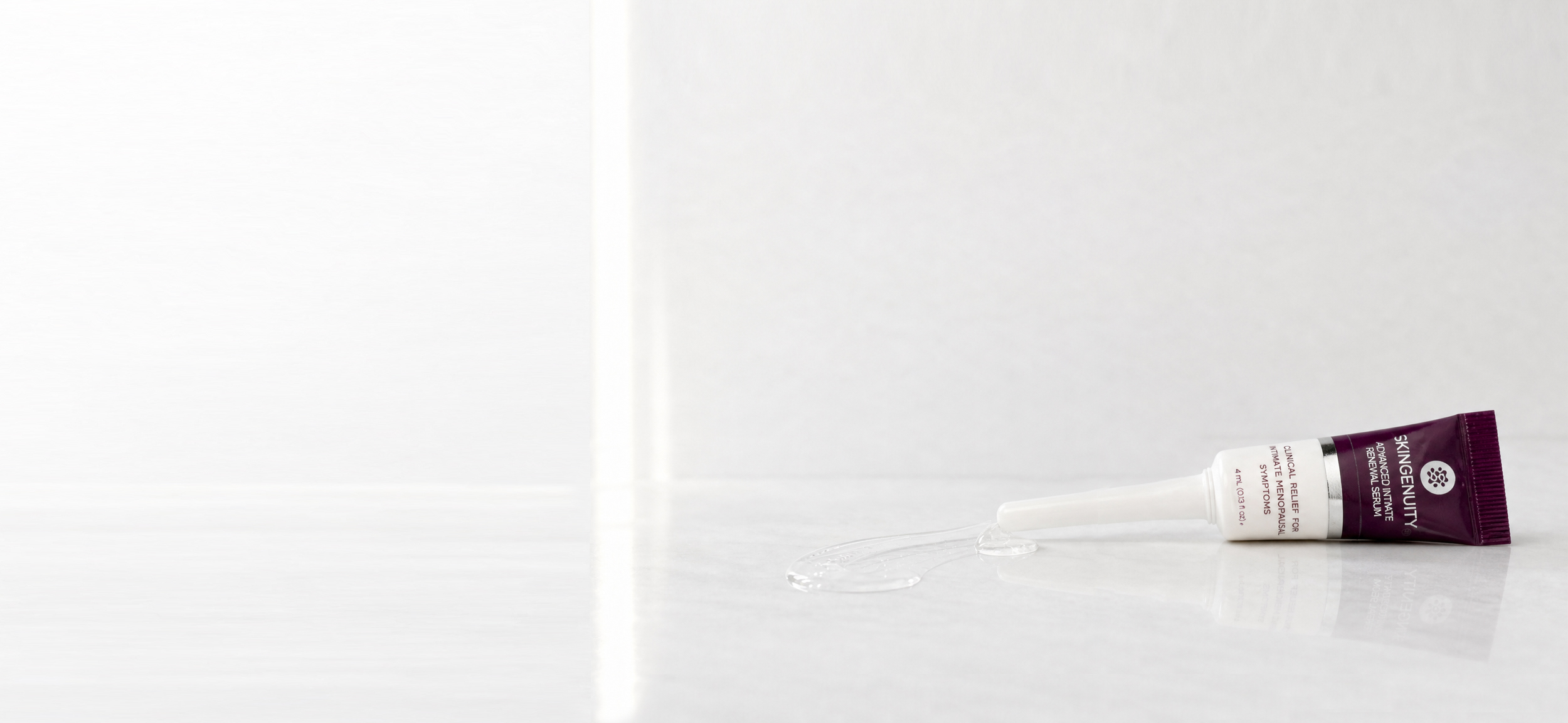
AIRS Advanced Intimate Renewal Serum is a hormone-free cosmetic serum that helps moisturize, soothe and comfort delicate intimate skin. It comes in single-use applicators, twelve to a box.
Frequently asked questions
What type of lubricant is best for menopause dryness?
Many women find silicone-based lubricants work well because they last longer and need less reapplying. Water-based lubricants are a good choice if you want easy cleanup or use silicone toys. Whichever you choose, look for a fragrance-free product made for vaginal use.
Is coconut oil a good lubricant after menopause?
Some women like plant oils, but oils can weaken latex condoms and are harder to wash off. If you use condoms or are prone to irritation, a silicone- or water-based lubricant made for vaginal use is a safer choice.
Why does my lubricant sting or burn?
Stinging is often caused by warming or tingling agents, fragrance, or very concentrated (high-osmolality) formulas, such as those high in glycerin. Switch to a simpler, fragrance-free product and talk to a clinician if burning continues.
Do I need a lubricant and a moisturizer?
Often, yes. A lubricant reduces friction during sex. A vaginal moisturizer is used every few days for everyday comfort. Many women use both.
Which lubricants are safe with condoms?
Water-based and silicone-based lubricants are generally compatible with latex condoms. Oil-based products, including petroleum jelly and many natural oils, can weaken latex.
Related reading
- Vaginal moisturizers & dryness creams: how to choose
- Vaginal moisturizer vs. lubricant
- Sex after menopause: a comfort guide
- Painful sex after menopause
- Vaginal dryness after menopause
Sources
- The North American Menopause Society. The 2020 genitourinary syndrome of menopause position statement. Menopause. 2020;27(9):976–992.
- Edwards D, Panay N. Treating vulvovaginal atrophy/genitourinary syndrome of menopause: how important is vaginal lubricant and moisturizer composition? Climacteric. 2016;19(2):151–161.
- World Health Organization. Use and procurement of additional lubricants for male and female condoms: WHO/UNFPA/FHI360 advisory note. 2012.