Walk down any pharmacy aisle and you will find vaginal moisturizers, gels, creams and serums that all promise comfort. They are not all the same. The ingredients, pH and concentration of a product can make the difference between soothing relief and new irritation [1][2]. This guide explains what a vaginal moisturizer does, how it differs from a lubricant or a prescription cream, and what to look for on the label.
Key takeaways
- A vaginal moisturizer is used on a regular schedule for everyday comfort. A lubricant is used during sex.
- Look for a product made for vaginal use, with a pH near 3.8 to 4.5 and a low osmolality (not overly concentrated).
- Skip fragrance, warming or tingling agents, flavors and harsh preservatives.
- “Vaginal cream” can mean an over-the-counter moisturizer or a prescription medicine. Read the label.
By the numbers
- In the REVIVE survey (Kingsberg et al., Journal of Sexual Medicine, 2013, 3,046 U.S. postmenopausal women), 55% of women with menopause-related vaginal symptoms named dryness as a symptom, the most common one reported.
- 29% were using an over-the-counter vaginal product, and many said they wanted better, longer-lasting relief.
What a vaginal moisturizer does
Vaginal moisturizers are designed to cling to the vaginal lining and hold water there, so tissue feels more comfortable day to day. Unlike a lubricant, which you apply right before sex and which works for a short time, a moisturizer is used on a schedule, often every two to three days [1]. Many women use both: a moisturizer for daily comfort and a lubricant for intimacy. See vaginal moisturizer vs. lubricant for a side-by-side.
Moisturizer, lubricant or cream: quick comparison
| Product type | When to use | What it’s for | Prescription? |
|---|---|---|---|
| Vaginal moisturizer (gel, cream or serum) | Every 2–3 days, on a schedule | Everyday comfort and hydration | No |
| Lubricant | Right before and during sex | Reducing friction during intimacy | No |
| Prescription vaginal cream (e.g., estrogen) | As prescribed | Treating menopause-related changes | Yes |
| Hormone-free intimate serum | On a schedule, like a moisturizer | Moisturizing and comforting intimate skin | No |
What to look for in a vaginal moisturizer
1. Made for vaginal use
Facial creams and body lotions are not formulated for intimate tissue. Choose a product labeled for vaginal or intimate use.
2. A vagina-friendly pH
A healthy vagina is mildly acidic. A WHO advisory note on personal lubricants suggests products for vaginal use have a pH of about 3.8 to 4.5 [3]. Many brands list pH on the box or website.
3. Low osmolality
Osmolality describes how concentrated a product is. Very concentrated products, often those high in glycerin or propylene glycol, can draw water out of tissue and may irritate it. The same WHO note recommends keeping osmolality low, ideally close to the body’s own [3][2]. If a brand publishes its osmolality, lower is generally gentler.
4. Comfort-focused ingredients
- Hyaluronic acid, a moisture-binding ingredient used in many intimate products. See hyaluronic acid for vaginal dryness.
- Polycarbophil and other bioadhesive gels that help moisture stay in place
- Plant oils or vitamin E in some formulas (oil-based products are not latex-condom safe)
5. Fewer irritants
- Fragrance and perfume
- Warming, cooling or tingling agents
- Flavors and sweeteners
- Harsh preservatives or antiseptics such as chlorhexidine
- Spermicides such as nonoxynol-9
Over-the-counter “vaginal dryness cream” vs. prescription cream
Searching for a vaginal dryness cream can bring up two very different kinds of products. Over-the-counter moisturizing creams and gels are cosmetics for comfort. Prescription creams, like low-dose vaginal estrogen, are medicines a clinician prescribes for menopause-related changes [1][4]. If over-the-counter products are not enough, it is worth asking a clinician about prescription options. Compare them in vaginal estrogen vs. hormone-free options.
How to use a vaginal moisturizer
- Apply at bedtime so the product can stay in place
- Use it on a regular schedule, not only before sex
- Give it a few weeks of consistent use before judging results
- Stop using any product that burns, itches or stings, and talk to a clinician
When to see a clinician
See a clinician if dryness does not improve, if you have pain, bleeding, unusual discharge or urinary symptoms, or if you are not sure what is causing your symptoms. Dryness can overlap with infections and skin conditions that need specific care. Learn more in vaginal dryness: causes and symptoms.
Looking for hormone-free comfort?
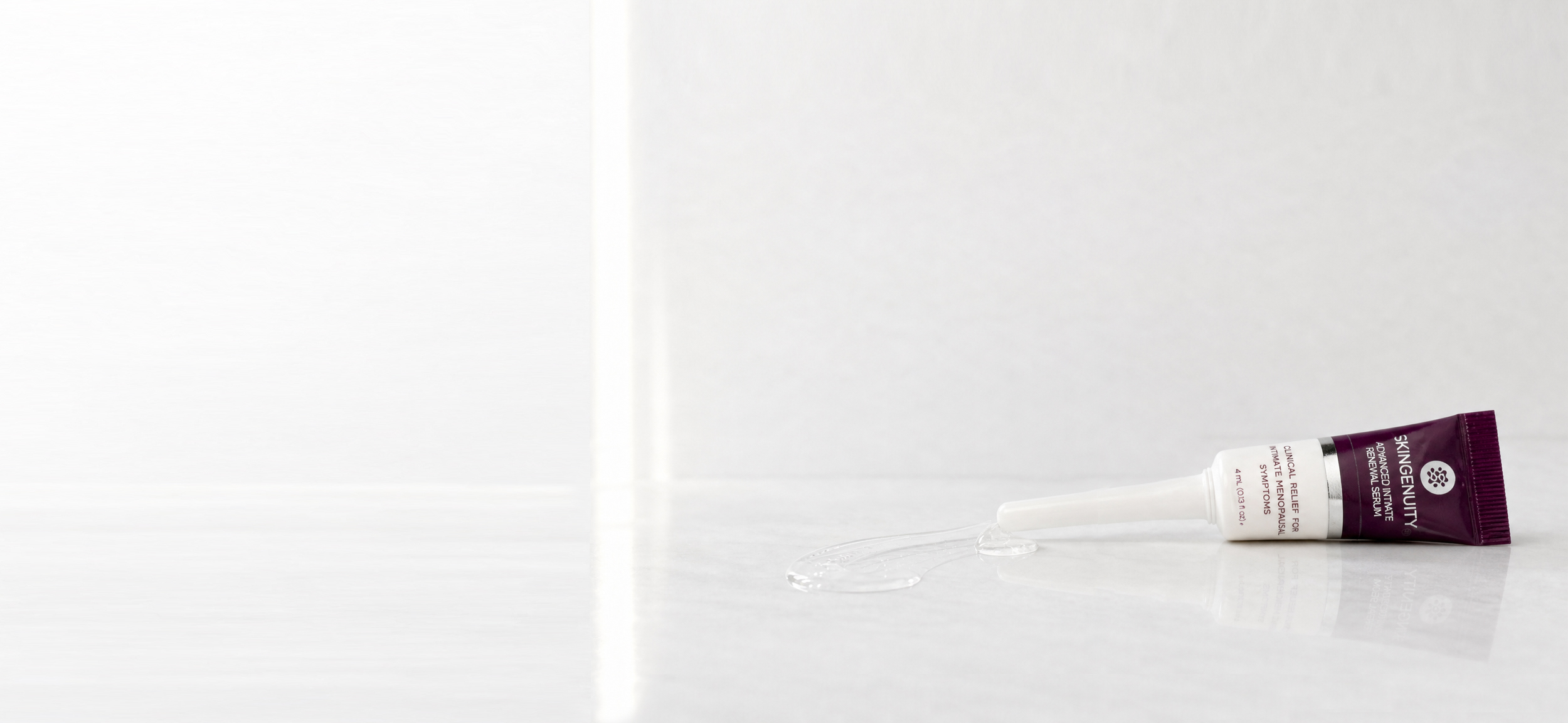
AIRS Advanced Intimate Renewal Serum is a hormone-free cosmetic serum that helps moisturize, soothe and comfort delicate intimate skin. It comes in single-use applicators, twelve to a box.
Frequently asked questions
What is the difference between a vaginal moisturizer and a vaginal cream?
“Vaginal cream” can mean two very different things. Over-the-counter moisturizing creams and gels are cosmetic products for everyday comfort. Prescription vaginal creams, such as estrogen cream, are medicines that need a clinician. Check the label to see which one you are buying.
How often should I use a vaginal moisturizer?
Most vaginal moisturizers are used on a schedule, often every two to three days, rather than only before sex. Follow the directions on the product you choose.
What pH should a vaginal moisturizer have?
Look for a product made for vaginal use with a pH close to the vagina’s natural range of about 3.8 to 4.5, as recommended in a WHO advisory note on personal lubricants.
Can I use a vaginal moisturizer with condoms?
Many water-based moisturizers are compatible with latex condoms, but oil-based products can weaken latex. Check the product label for condom compatibility.
How long does it take a vaginal moisturizer to work?
Many women notice more comfort within days, but it often takes a few weeks of consistent use to judge how well a product works for you.
Related reading
- Vaginal moisturizer vs. lubricant
- Best lubricant for menopause dryness
- Hyaluronic acid for vaginal dryness
- How to treat vaginal dryness
- Non-hormonal treatment options
Sources
- The North American Menopause Society. The 2020 genitourinary syndrome of menopause position statement. Menopause. 2020;27(9):976–992.
- Edwards D, Panay N. Treating vulvovaginal atrophy/genitourinary syndrome of menopause: how important is vaginal lubricant and moisturizer composition? Climacteric. 2016;19(2):151–161.
- World Health Organization. Use and procurement of additional lubricants for male and female condoms: WHO/UNFPA/FHI360 advisory note. 2012.
- Cleveland Clinic. Vaginal atrophy (genitourinary syndrome of menopause).