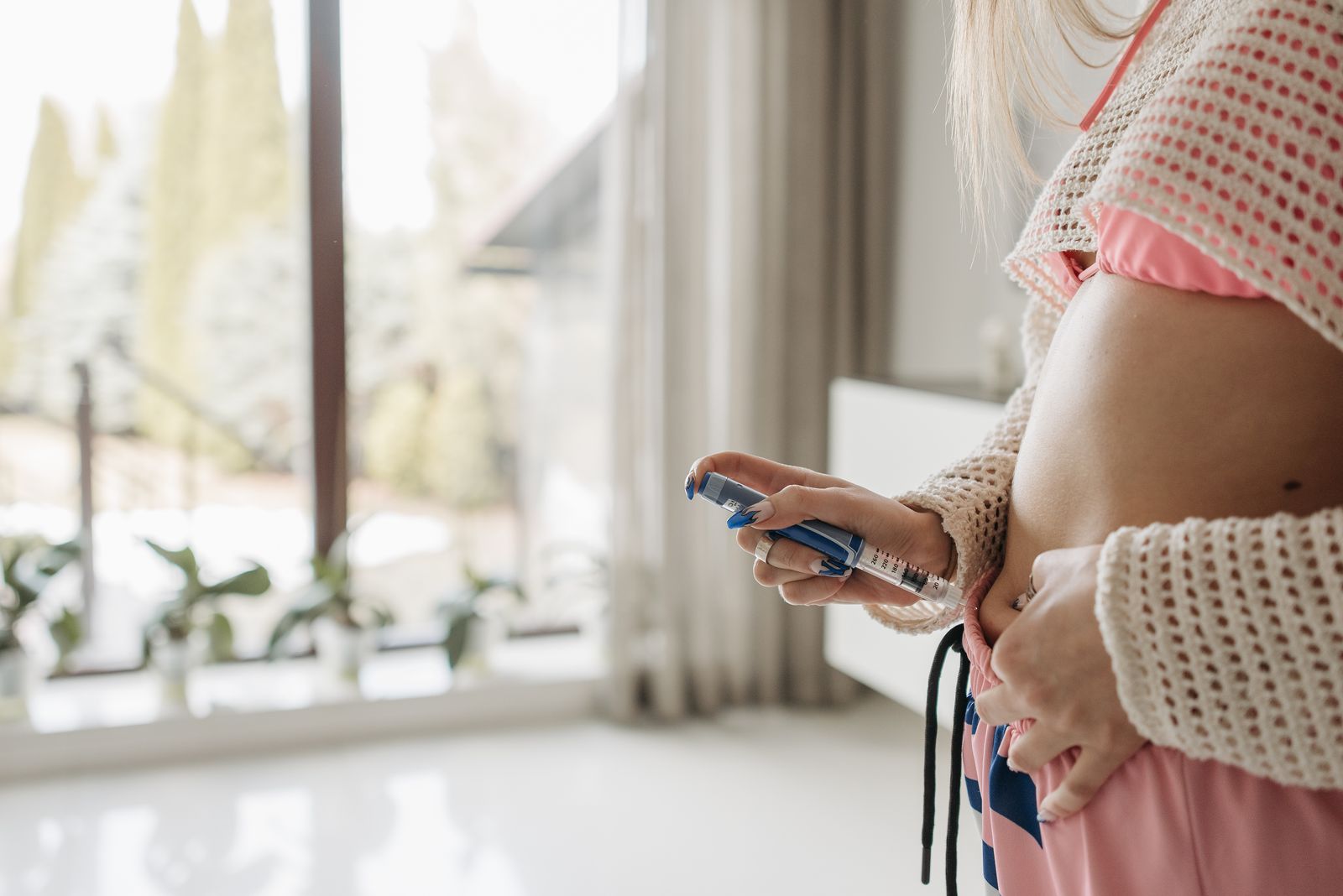
Short answer: There is no good evidence that Ozempic or other GLP-1 drugs directly cause vaginal dryness. Vaginal dryness is not listed as a side effect on the US labels for semaglutide (Ozempic, Wegovy) or tirzepatide (Mounjaro, Zepbound) [3][4][5][6]. Some women do notice changes, though. Indirect factors like dehydration from stomach side effects, fast weight loss and perimenopause may play a part.
The honest truth is that the research is thin in both directions. No trial has been designed to check whether these drugs cause vaginal dryness. So far there is one published case report of genital dryness in a woman taking tirzepatide [7], plus a lot of online talk. Here is what is known, what is guesswork, and what you can do in the meantime.
The short version
- “Ozempic vulva” is not a medical diagnosis. It is a nickname for changes some women notice after large, fast weight loss [1][2].
- Drug labels don’t list it. We found no mention of vaginal or genital dryness in the current Ozempic, Wegovy, Mounjaro or Zepbound labels [3][4][5][6].
- Stomach side effects are common, and vomiting or diarrhea can lead to dehydration [3][13].
- Timing matters. Many women start these drugs in their 40s and 50s, when perimenopause can cause dryness on its own [14].
- Don’t stop your medicine on your own. Talk to your prescriber about any new symptoms [1][12].
What is “Ozempic vulva”?
“Ozempic vulva” is an informal term from social media and news stories, not a medical condition. Hinge Health describes it as changes to the outer genitals after big weight loss on GLP-1 drugs, mainly looser skin and less fullness in the mons pubis (the mound above the pubic bone) and outer labia [2].
In a 2025 Healthline report, UK gynecologist Prabha Sivaraman said the drug itself doesn’t act on the vulva or pelvic floor. Instead, fast weight loss can shrink the fat pads in the vulva, and the skin may not keep up [1]. The same report notes the term is sometimes stretched to cover vaginal dryness, a weaker pelvic floor and more discharge [1]. These accounts are clinician opinion and patient stories, not study results.
Hinge Health calls the visible changes “mainly cosmetic” but notes they can still be upsetting [2]. If your main concern is dryness or irritation of the outer skin, our guide to vulvar dryness covers gentle care.
Does the Ozempic label list vaginal dryness as a side effect?
No. We checked the current FDA prescribing information for all four brand-name drugs and found no listed vaginal, vulvar, genital or sexual side effects [3][4][5][6]. What the labels do list, very clearly, are stomach side effects and a warning about dehydration.
| Drug (ingredient) | Most common side effects on the label | Vaginal or genital effects listed? |
|---|---|---|
| Ozempic (semaglutide) | Nausea 15.8–20.3%, diarrhea 8.5–8.8%, vomiting 5–9.2% [3] | None found [3] |
| Wegovy (semaglutide) | Nausea 44%, diarrhea 30%, vomiting 24%, constipation 24% [4] | None found [4] |
| Mounjaro (tirzepatide) | Nausea 12–18%, diarrhea 12–17%, vomiting 5–9% [5] | None found [5] |
| Zepbound (tirzepatide) | Nausea 25–29%, diarrhea 19–23%, vomiting 8–13% [6] | None found [6] |
All four labels warn that kidney problems have been reported mostly in people whose stomach side effects led to dehydration [3][4][5][6]. That matters here, because being low on fluids is one plausible indirect link to feeling dry.
A label not listing something doesn’t prove it never happens. Labels mainly reflect what showed up in trials, and sexual side effects in women are rarely measured. For other medicines that are known to cause dryness, see our list of medications that cause vaginal dryness.
What does the research say about GLP-1s and vaginal dryness?
Very little. There are no clinical trials showing that GLP-1 drugs cause vaginal dryness, and none designed to test it. Here is everything relevant we could find:
- One case report. A 36-year-old woman taking tirzepatide reported low desire, genital dryness and trouble reaching orgasm. Her symptoms eased after she stopped the drug and came back when she restarted it [7]. That pattern is suggestive, but it is one person, and her weight and other treatments changed at the same time.
- Drug safety databases. A 2026 study of FDA adverse event reports looked at sexual side effects of diabetes drugs, but it only studied erectile dysfunction in men [8]. It did not look at women.
- A theory about desire. A 2025 review proposed that GLP-1 drugs might lower sexual desire through brain chemistry, while weight loss might improve sexual function over time. The authors say no long-term data exist yet, and the review does not discuss vaginal dryness [9].
- A large records study. A 2026 conference abstract, reported by AUANews, found no increase in vulvar atrophy diagnoses over one year in women without diabetes taking GLP-1 drugs, compared with similar women not taking them [10]. It has not yet been published as a full paper.
Researchers are starting to ask the question directly. Mayo Clinic is running an observational study of women on GLP-1 therapy to see whether they notice changes in desire, arousal, comfort and other parts of sexual health [11]. No results have been published yet.
Why might you feel drier while taking a GLP-1?
Even if the drug doesn’t affect vaginal tissue directly, several things that often happen around GLP-1 treatment could add to dryness. None of these has been proven to cause vaginal dryness in GLP-1 users. They are reasonable possibilities to discuss with your clinician.
Dehydration from stomach side effects
Nausea, vomiting and diarrhea are the most common side effects of these drugs [3][4]. The NHS lists vomiting and diarrhea as common causes of dehydration, with signs like thirst, dark yellow urine, dizziness and tiredness [13]. Cleveland Clinic adds that eating less on a GLP-1 can also mean drinking less [12]. Our guide to dehydration and vaginal dryness explains what the evidence does and doesn’t show.
Fast weight loss and eating less
Clinicians quoted by Healthline and Hinge Health point to rapid fat loss, muscle loss and lower food intake as possible factors in vulvar and pelvic changes [1][2]. Hinge Health also suggests that losing body fat may lower estrogen, which can thin and dry vaginal tissue, though it notes more research is needed [2].
Perimenopause and menopause
This may be the biggest factor for many readers. According to the NHS, vaginal dryness, burning, itching and irritation can start during perimenopause and continue after menopause [14]. If you started a GLP-1 in your 40s or 50s, the timing may be a coincidence. Sivaraman told Healthline that vaginal dryness is almost always hormonal, such as from menopause or contraceptives, rather than caused by the drug [1]. Learn more about perimenopause and vaginal dryness.
Other medicines and conditions
The NHS lists hormonal contraceptives, antidepressants and diabetes among causes of vaginal dryness [15]. Many people taking GLP-1s have type 2 diabetes, which can also play a role. One more detail: the tirzepatide labels advise people on birth control pills to switch to a non-pill method, or add a barrier method, for 4 weeks after starting and after each dose increase [5][6]. Changing birth control can change how your body feels, so mention it to your clinician.
Could GLP-1s help some women?
Possibly, in some situations. A 2023 review of 11 randomized trials in women with polycystic ovary syndrome (PCOS) found that GLP-1 drugs improved insulin resistance, menstrual regularity and natural pregnancy rates compared with control groups [16]. The authors called for larger, longer studies [16].
The Sexual Medicine Society of North America notes that GLP-1 drugs may lower desire for some people early on, but weight loss may later help hormone balance, self-esteem and genital blood flow [17]. It also says there isn’t enough research yet to draw firm conclusions [17].
What can you do if you feel dry on Ozempic?
Start with simple comfort steps and let your prescriber know. The table below matches common complaints with possible reasons and practical next steps.
| Symptom | Possible reason | What to do |
|---|---|---|
| Dryness plus thirst, dark urine or dizziness | Dehydration, often after vomiting or diarrhea [13] | Sip fluids through the day until your urine is pale; tell your prescriber if stomach side effects are ongoing [12][13] |
| Dryness or pain during sex | Lower estrogen (perimenopause or menopause), less arousal [14][15] | Use a water-based lubricant during sex; give arousal more time [15] |
| Everyday dryness, itching or burning | Hormonal changes; irritating products [15] | Try a vaginal moisturizer; use unperfumed washes and skip douches [15] |
| Looser or less full outer genital skin | Loss of fat from the vulva after fast weight loss [1][2] | Ask your prescriber whether a slower pace of weight loss makes sense [2] |
| Lower desire or trouble with orgasm | Unclear; possibly linked to the drug, weight change or mood [7][9] | Bring it up with your clinician; don’t stop the drug on your own |
| Dryness after changing birth control | Hormonal contraceptives can cause dryness [15] | Ask about non-oral options that suit you [5][6] |
Moisturizers and lubricants do different jobs. A moisturizer is used regularly for everyday comfort, and a lubricant is used during sex [15]. Our guide to moisturizers vs. lubricants explains how to choose. The NHS advises against using body creams or lotions not made for the vagina, because they can cause irritation [15].
To stay hydrated, Cleveland Clinic suggests sipping water throughout the day, setting reminders, and replacing fluids and electrolytes if you have diarrhea [12]. The NHS suggests starting with small sips if you feel sick [13].
Should you stop taking Ozempic if you have vaginal dryness?
Not on your own. Talk to your prescriber first. Cleveland Clinic says side effects often ease after the first three to four weeks, and that a prescriber may slow your dose increases, suggest other ways to manage symptoms, or recommend a different GLP-1 [12]. A UK doctor quoted by Healthline advised contacting your prescriber promptly about vaginal irritation you think is linked to treatment [1]. Not sure how to start that conversation? See our tips on talking to your doctor about vaginal dryness.
When to see a doctor
- Dryness that lasts more than a few weeks even with self-care [15]
- Bleeding after sex, between periods, or after menopause [15]
- Unusual discharge, odor, itching or burning [15]
- Pain during sex that is getting worse
- New urine leaks, pelvic heaviness or a bulge [1][2]
- Signs of dehydration that don’t improve, such as ongoing dizziness, dark urine or peeing less than usual [13]
- Vomiting or diarrhea that won’t stop while on your GLP-1 [3][12]
Call 911 (or your local emergency number) for signs of shock, such as confusion, cold or blotchy skin, or trouble breathing [13].
Frequently asked questions
Does Ozempic cause vaginal dryness?
There’s no good evidence that it does directly. Vaginal dryness isn’t listed on the US label for Ozempic, though indirect factors like dehydration from stomach side effects or perimenopause may contribute [3][14].
What is Ozempic vulva?
It’s a social media nickname, not a diagnosis. It usually refers to looser skin and less fullness in the mons pubis and outer labia after fast weight loss on GLP-1 drugs [1][2].
Do Mounjaro or Zepbound cause vaginal dryness?
Their US labels don’t list it [5][6]. One case report described genital dryness in a woman taking tirzepatide, but a single case can’t prove the drug caused it [7].
Can dehydration from Ozempic make you dry down there?
It’s possible, but not well studied. Vomiting and diarrhea are common GLP-1 side effects and can cause dehydration, so drinking enough fluids is a sensible first step [3][13].
Should I stop my GLP-1 if I feel dry?
No, not without talking to your prescriber. They may be able to slow your dose increases or suggest other ways to manage side effects [12].
Will vaginal dryness go away if I stop Ozempic?
No one knows yet, because it hasn’t been studied. If the cause is perimenopause or menopause, dryness often continues regardless of the drug, so moisturizers, lubricants or prescription options may still help [14][15].
Related reading
- Medications That Can Cause Vaginal Dryness
- Can Dehydration Cause Vaginal Dryness?
- Vaginal Dryness: Causes & Symptoms
- Perimenopause and Vaginal Dryness
- Vulvar Dryness
- Vaginal Moisturizer vs. Lubricant
- Diabetes and Vaginal Dryness
- How to Talk to Your Doctor About Vaginal Dryness
Sources
- Stokes V. What Is ‘Ozempic Vulva’ and Is It a Real Side Effect of GLP-1 Drugs? Healthline, Aug 23, 2025 (updated Dec 11, 2025). Link
- Hinge Health. Ozempic vulva: what it is, symptoms, and tips for treatment and overall pelvic health. Reviewed by B. Toprani PT DPT, J. Kleiner PT DPT, R. Keyme MD; Dec 22, 2025. Link
- Novo Nordisk. OZEMPIC (semaglutide) injection: Full Prescribing Information. US FDA, revised 05/2026. Link
- Novo Nordisk. WEGOVY (semaglutide) injection: label. DailyMed, US National Library of Medicine, revised 6/2026. Link
- Eli Lilly. MOUNJARO (tirzepatide) injection: Full Prescribing Information. US FDA, revised 04/2026. Link
- Eli Lilly. ZEPBOUND (tirzepatide) injection: label. DailyMed, US National Library of Medicine, revised 11/2026. Link
- Mohammed GF, Al-Dhubaibi MS, Bahaj SS, Mohammed RM. Tirzepatide Affect Sexual Function in Women: Case Report. Clin Med Insights Case Rep. 2025;18:11795476251347753. PMID: 40487373. DOI: 10.1177/11795476251347753 Link
- Lin S, Ding X, Dang X, Zhan Q. Sexual Safety Signals of Common Antidiabetic Drugs: Insights From FAERS Disproportionality Analysis. Andrology. 2026;14(6):1627-1635. PMID: 41883294. DOI: 10.1111/andr.70222 Link
- Gelfand ST, Tveit MC, Simon JA. Clinical review of how glucagon-like peptide-1 agonist obesity medications decrease sexual desire, and a biopsychosocial model for why we don’t ‘see’ it. Obes Pillars. 2025;17:100233. PMID: 41404471. DOI: 10.1016/j.obpill.2025.100233 Link
- Hammad MAM, Yih J. GLP-1 Receptor Agonists, Vaginal Testosterone, and New Directions in Sexual Medicine. AUANews (American Urological Association), July 6, 2026. Link
- Mayo Clinic. A Study of GLP-1-Based Therapies on Sexual Health in Women (observational study listing). Mayo Clinic Research, accessed Nov 2026. Link
- Cleveland Clinic. How To Manage GLP-1 Side Effects. Cleveland Clinic Health Essentials, Sept 9, 2026. Link
- NHS. Dehydration. NHS website, reviewed May 1, 2026. Link
- NHS. Menopause: Symptoms. NHS website, reviewed May 19, 2026. Link
- NHS. Vaginal dryness. NHS website, reviewed July 24, 2025. Link
- Zhou L, Qu H, Yang L, Shou L. Effects of GLP1RAs on pregnancy rate and menstrual cyclicity in women with polycystic ovary syndrome: a meta-analysis and systematic review. BMC Endocr Disord. 2023;23:245. PMID: 37940910. DOI: 10.1186/s12902-023-01500-5 Link
- Sexual Medicine Society of North America (SMSNA). What Effects do GLP-1 Agonists Have on Sexual Health? SexHealthMatters.org, accessed Nov 2026. Link