Educational content only. This is not medical advice and is not product labeling. Talk with your clinician about your own symptoms. Medical disclaimer.
Genitourinary Syndrome of Menopause, or GSM, is the medical term for the group of vaginal, vulvar and urinary changes caused by lower estrogen during and after menopause. It used to be called vulvovaginal atrophy. The newer name reflects that it affects the bladder and urethra as well as the vagina.

How common is GSM?
Very common. The Menopause Society estimates that GSM affects roughly 27% to 84% of postmenopausal women, yet it is frequently underdiagnosed and undertreated [1]. Unlike hot flashes, GSM tends to be progressive: without treatment, symptoms usually continue or worsen over time.
Symptoms of GSM
- Vaginal: dryness, burning, irritation and reduced lubrication
- Sexual: pain with intercourse, reduced arousal, and spotting after sex
- Urinary: urgency, frequency, burning with urination and recurrent UTIs
- Vulvar: itching, thinning skin and sensitivity
What changes in the tissue
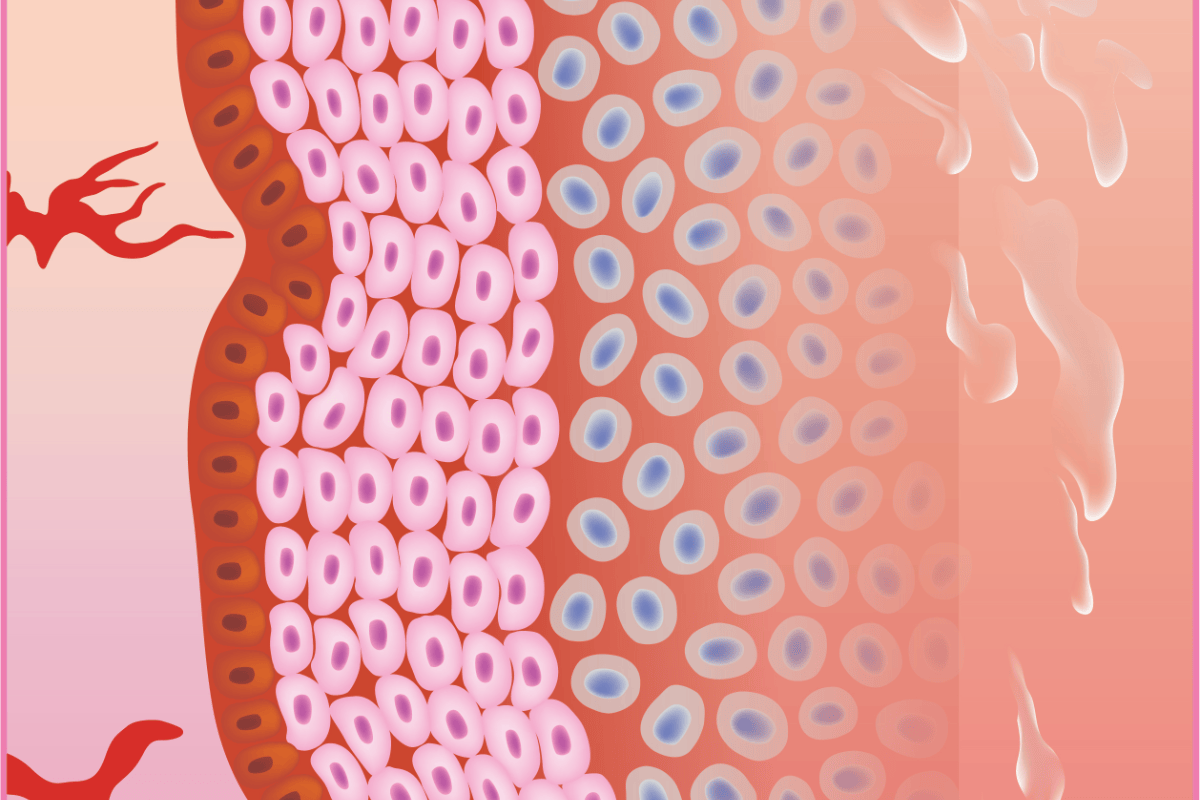
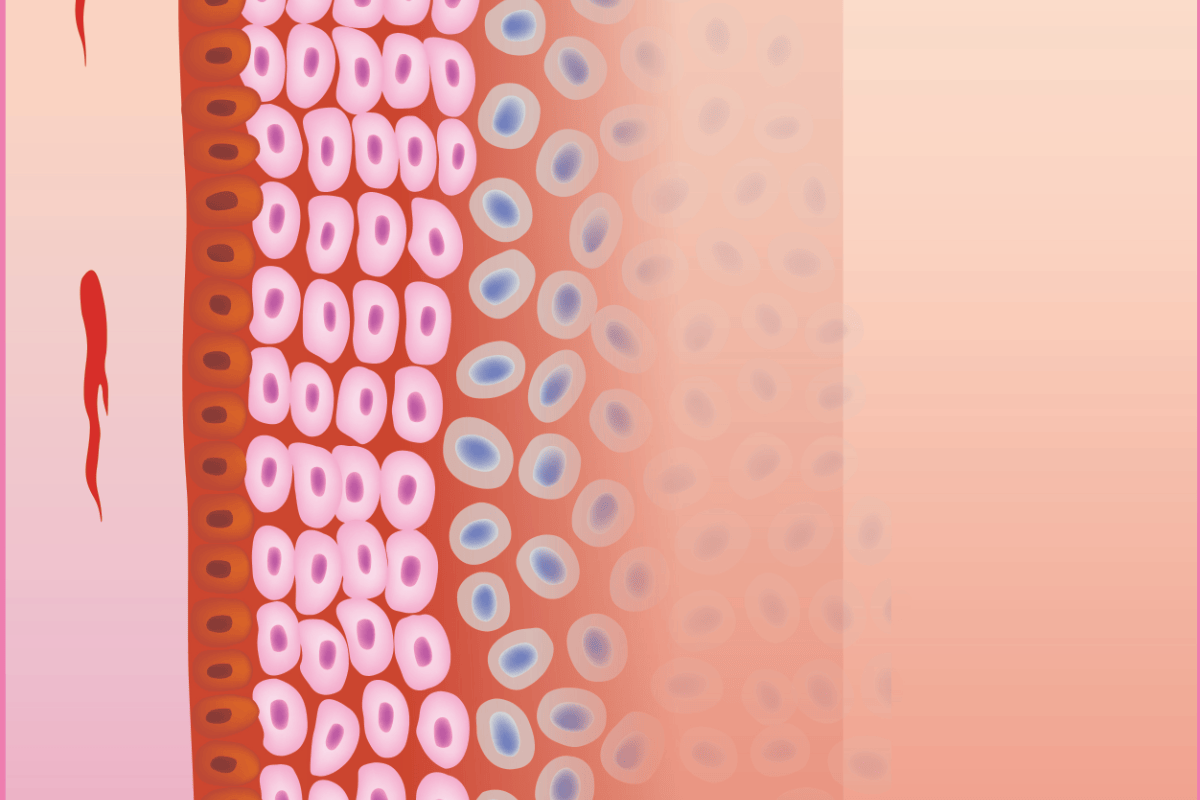
Before menopause, estrogen keeps the vaginal lining thick and multi-layered, with a rich blood supply and natural moisture. After menopause the lining becomes thinner and flatter, blood flow drops and natural secretions decrease. That’s why dryness, irritation and discomfort become more common.
Perimenopause: it can start earlier than you think
Estrogen begins to fluctuate and decline years before your final period. Some women notice dryness or discomfort during sex in their 40s, even while they still have regular cycles. Read more in our guide to vaginal dryness in perimenopause.
Managing GSM
Treatment usually starts with non-hormonal moisturizers and lubricants and can move to local (vaginal) hormone therapy or other prescription options. Hormone-free serums with hyaluronic acid, peptides and growth factors are another option, especially for women who can’t or prefer not to use hormones. See the full rundown on our treatment options page.
Hormone-free intimate comfort
AIRS Advanced Intimate Renewal Serum is a hormone-free intimate serum that helps moisturize and comfort delicate intimate skin.
Is GSM the same as vaginal atrophy?
GSM is the newer, broader term. It includes the vaginal changes once called atrophy plus related urinary and vulvar symptoms.
Can GSM be reversed?
Symptoms can often improve a lot with consistent care. Since the underlying hormone change continues, most women need ongoing maintenance.
Related reading
- Vaginal laser vs. at-home care
- Vaginal estrogen vs. hormone-free options
- Vaginal dryness after hysterectomy
- Vaginal dryness after menopause
- Painful sex after menopause
- Alternatives to vaginal estrogen
- Vaginal dryness after breast cancer
- Hyaluronic acid for vaginal dryness
- What is vaginal atrophy?
- Recurrent UTIs after menopause
Sources
- The North American Menopause Society. The 2020 genitourinary syndrome of menopause position statement. Menopause. 2020;27(9):976–992.
- The Menopause Society. MenoNote: Genitourinary Syndrome of Menopause.
Reviewed and updated September 30, 2026 by the Vaginal Dryness Relief Editorial Team.
This content is for educational purposes only and isn’t a substitute for professional medical advice. See our medical disclaimer.